
Wangshu Zhu
M.S. in Electrical Engineering, Columbia University · New York, USA
About
I am a second-year M.S. student in Electrical Engineering at Columbia University.
My research focuses on developing reasoning-capable foundation models — unifying architectural innovation, training design, and multi-agent collaboration to build adaptive and interpretable intelligence systems. I am particularly interested in bridging model-level learning and system-level reasoning, where foundation models can not only perceive but also plan, revise, and validate their own outputs in real-world environments.
Recent projects include AutoClimDS, a knowledge-grounded multi-agent framework that enables autonomous reasoning and data-driven discovery for scientific workflows, and SegmentFusion, a write-then-revise training framework that couples autoregressive drafting with diffusion-based refinement for controllable reasoning. Together, these works reflect my broader aim to develop AI systems that can learn, reason, and self-correct across modalities and contexts — advancing toward generalizable, trustworthy, and truly agentic intelligence.
Selected Projects
Agentic & Reasoning AI
AutoClimDS — Knowledge-Grounded Multi-Agent Scientific Reasoning
Built a knowledge-grounded multi-agent framework that plans data acquisition, executes analyses, and explains findings from natural-language prompts. Uses a domain memory (KG + tool registry) and ReAct-style orchestration to ensure provenance, repeatability, and auditable reasoning in scientific workflows.


SegmentFusion — “Write-then-Revise” Training for LLMs
Proposed a write-then-revise paradigm that combines autoregressive drafting and masked-diffusion refinement within a single sequence. A lightweight router aligns losses across AR/MDM segments, improving reasoning stability, controllability, and revision-style interaction.
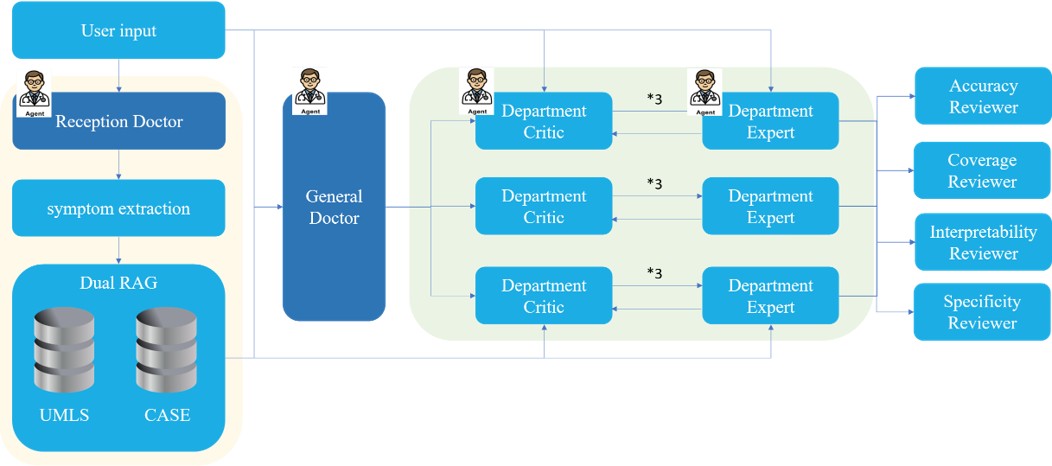
Clinical Multi-Agent Decision Support System
Designed a dual-retrieval pipeline (biomedical KG + case memory) with a conditional reviewer that challenges uncertain drafts and verifies evidence chains. Achieved strong diagnostic accuracy while improving interpretability and uncertainty calibration in high-stakes settings.
Vision Intelligence
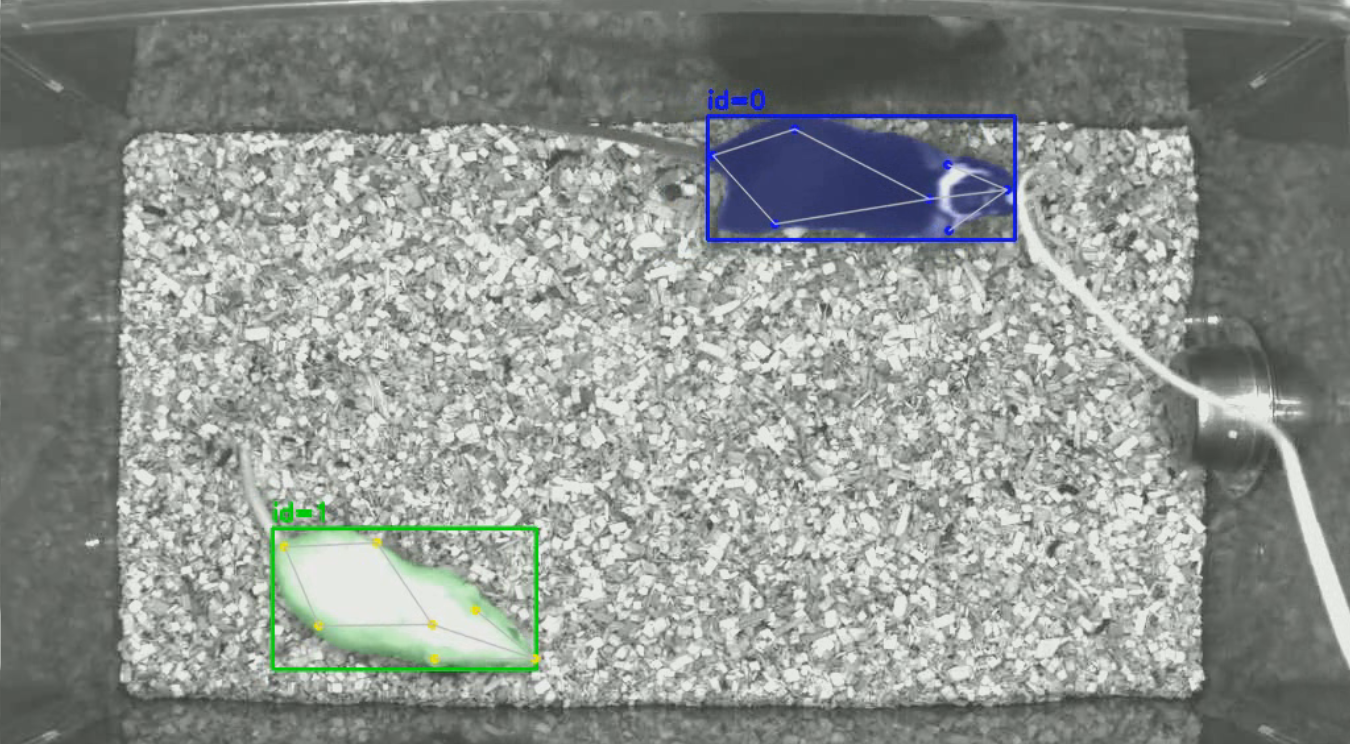
BioTrack — Self-Supervised Behavioral Video Tracking with State-Aware Control
Built a practical pipeline combining SAM2 tracking and YOLO re-detection with confidence-aware early-stop and resume. Uses tracked boxes to synthesize occlusion-aware data for targeted fine-tuning, supporting downstream behavioral-state & neural signals modeling.
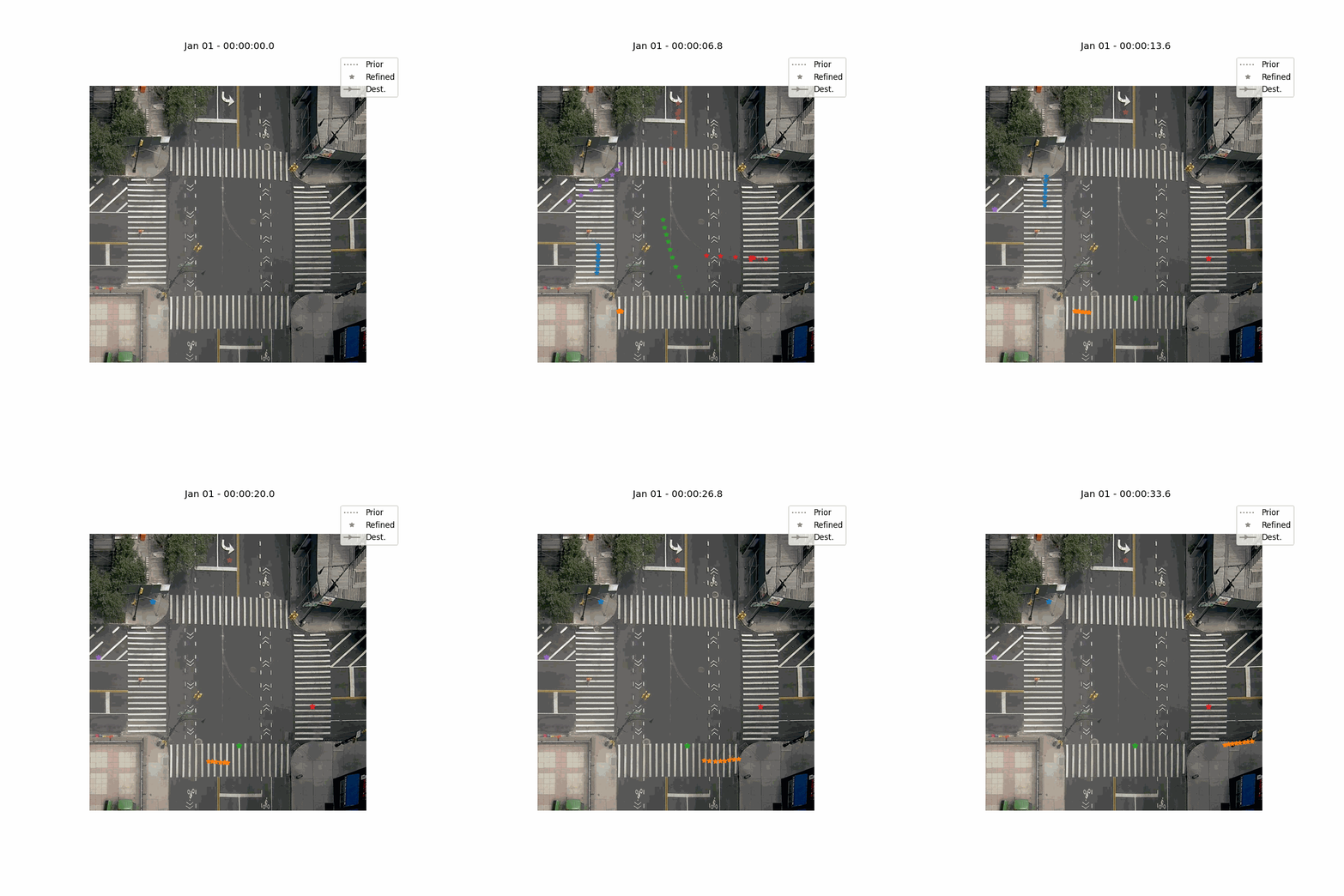
FairTraj — Reliable Trajectory Forecasting and Traffic Simulation System
Proposed a calibration-aware evaluation and standardized missingness protocols that unify model families under a single pipeline. Showed how protocol design can invert model rankings, motivating principled, reproducible benchmarking for intelligent mobility.
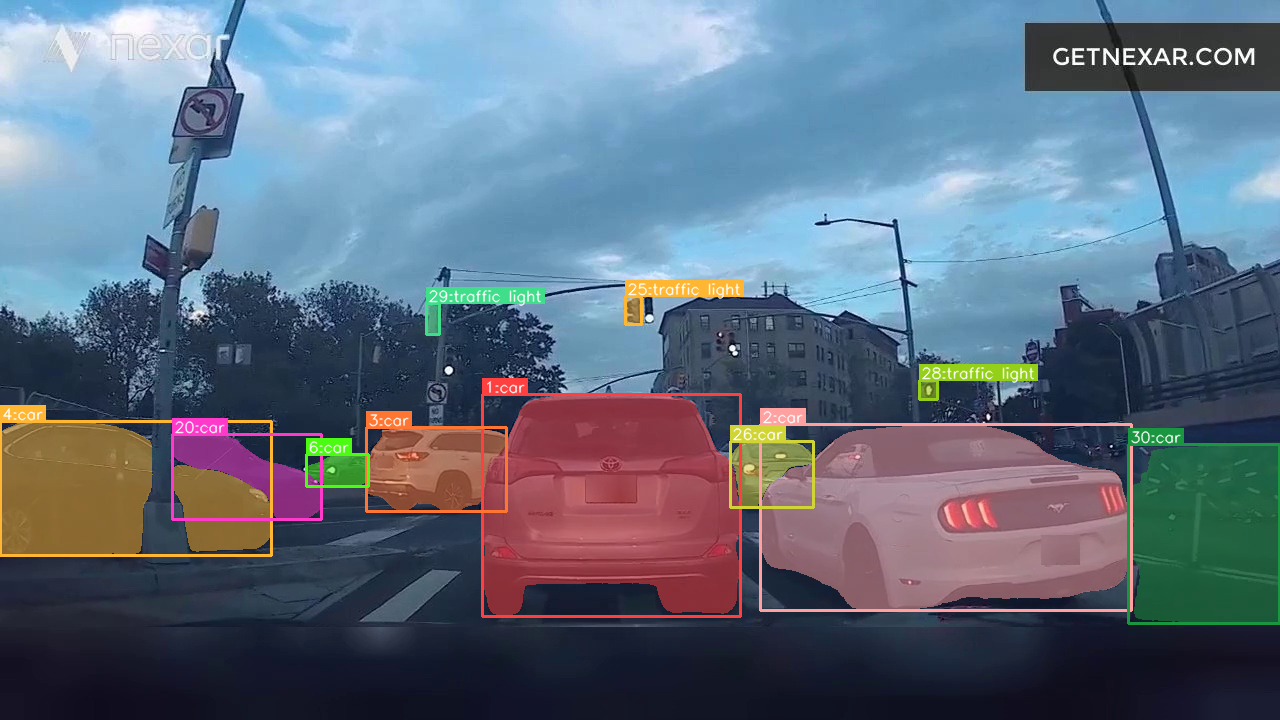
Interpretable Multimodal Collision Prediction
Converted detections, masks, depth, and optical flow into dialogue-style prompts for temporal risk forecasting. Produces human-readable rationales that bridge perception and decision-making for safety-critical deployment.
Publications & Manuscripts
- AutoClimDS: Climate Data Science Agentic AI -- A Knowledge Graph is All You Need. arXiv, 2025. (link)
Earlier Publications (Undergraduate)
- Zhu, W. The application and enlightenment of augmented reality technology in social disorders of autistic patients. IITCEE 2023. (link)
Teaching
Teaching Assistant — ECBM E4040 Neural Networks and Deep Learning
Assisted in teaching Columbia’s graduate-level Neural Networks and Deep Learning course, focusing on theoretical foundations, optimization dynamics, and neural network architectures. Responsibilities included leading recitations, designing assignment and exams, and offering guidance for students on course related questions.
Awards & Honors
- 2025 Spring MS Honors Students — Columbia University, 2025
- Advanced Master’s Research Specialization — Columbia University, 2025
Contact
Email: wz2708@columbia.edu · GitHub: wz2708